Thursday, May 17, 2012

Cold Eels on Radio National's Awaye


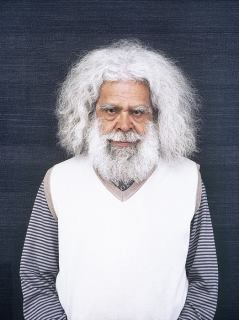
Radio National's  Daniel Browning talks with the curator of MGA's current exhibition Cold Eels and Distant Thoughts, Djon Mundine and artists Adam Hilll nad Jason Wing 


First up they unpack the enigmatic title of the exhibition that comes from a statement by Afro-American boxer Jack Johnson (1878–1946). When asked why white women were attracted to black men, Johnson amusingly and cryptically replied: ‘We eat cold eels and think distant thoughts’. GREAT LISTENING!

The eight photographers included in this exhibition belong to two generations: the younger Adam Hill and Jason Wing, who is of Aboriginal and Chinese descent; and six mid-career photographers, Michael Aird, Mervyn Bishop, Gary Lee, Peter Yanada McKenzie, Ricky Maynard and Michael Riley. 


Image:
Jason WING
Birripi people
An Australian government initiative self-portrait  2012
22 laser prints, black paint
collection of the artist


Wednesday, May 2, 2012

TIMEMACHINE

Lee Grant , winner of the Bowness Photography Prize in 2010 is editor of Timemachine a collaborative online magazine with editorial contributions from Tom Williams and Sarah Rhodes.

The current issue titled Elegy features an essay from Helen Ennis' Reveries and the work of photographers well known to MGA audiences , such as Stephen Dupont and Georgia Metaxas plus others.The website states "Timemachine publishes contemporary photography from Australia and elsewhere in the world. Our emphasis is on showing new work and longer term projects; and bringing the concerns of photographers and their colleagues to wider attention.


Thursday, April 26, 2012

Hoppé is the Leibovitz of the early 20th century


In June MGA hosts Emil Otto Hoppé:  society, studio, and street celebrating the work of a pivotal figure in photography in the first half of the twentieth century.

Cecil Beaton called him ‘The Master’; during the 1920s, he was the most famous photographer in the world. Now El Mundo applauds Hoppe's exhibition at MAPFRE in Madrid 

During the 1920s and 30s, Hoppé was one of Europe’s most sought-after photographers. His studio in South Kensington was a magnet for the rich and famous, from dancers to film stars and from royalty to leading writers and artists.

Hoppé photographed the most famous cultural identities of the era.  This exhibition features remarkable portraits of most of the leading social and cultural figures of the period, including King George V and Queen Elizabeth, Albert Einstein, Fritz Lang, Paul Robeson, and Benito Mussolini.

Many of Hoppé’s subjects included major literary figures. George Bernard Shaw, Sir Arthur Conan Doyle, AA Milne, Ezra Pound, Vita Sackville West, Anita Loos, Somerset Maugham, Henry James,  Rudyard Kipling and Thomas Hardy all sat for Hoppé. The artists Jacob Epstein, Marinetti, Marsden Hartley, Käthe Kollwitz and dancers Margot Fonteyn, Martha Graham and Nijinsky also had their portraits taken by Hoppé. 

The works of Emil Otto Hoppé come to Melbourne for the first time in an exhibition at MGA from 9 June to 29 July 2012.

Drawn from the collections of the National Portrait Gallery, London and the EO Hoppé Archive in Pasadena, California.


image:Emil Otto Hoppé
Ezra Pound  1918
gelatin-silver print


Tuesday, March 20, 2012

Rod McNicol wins NPPP


Congratulations to Rod McNicol, winner of the National Portrait Photography Prize for 2012 with his portrait of Jack Charles.

This year judges the judges were Louise Doyle, Director, National Portrait Gallery, Joanna Gilmour, Curator, National Portrait Gallery and invited guest judge, Blair French, Director, Artspace Sydney.

The forty six finalists were selected from 1500 entries. See it at the National Portrait Gallery in Canberra until May 20.


Thursday, February 16, 2012

Storm chaser

Nick Moir is well known for his news photography and has covered some of the biggest news stories in recent times including the Ivan Milat trial, the 2004 Tsunami in Banda Aceh and the Canberra bushfires. Catch this great video as Nick describes moving away from a "reactive" strategy of photo journalism to his own "roving" style that led to his astonishing bushfire and storm-chaser images that can be currently seen in OCULI: Terra Australis Incognita.


image:
Nick Moir
Darwin storm 2007
digital pigment print
60 x 70 cm


Wednesday, February 15, 2012

Iphoneographer: Nick Moir

MGA's current exhibition Oculi: Terra Australis Incognita features the work of photographer Nick Moir. Nick's work can also be seen on-line as part of The Age's Iphoneography section where readers are invited to contribute their own iphone pics.


Nick Moir
Beechworth 2009

digital pigment print

60 x 70 cm

Tuesday, February 14, 2012

Australia’s most coveted photograph donated to Monash Gallery of Art

Carol Jerrems’ Vale Street is the holy grail of Australian photography.
The work is extremely rare; it is probably Australia’s most valuable photograph. Vale Street is often placed alongside Max Dupain’s Sunbaker (1937) as an icon of Australian photography.

There are only a handful of known prints of Vale Street. The few that exist in private hands are highly sought after by both major public and private collections.

A generous Sydney-based collector has just donated her print of this most prized photograph to Melbourne’s Monash Gallery of Art. Susan Hesse acquired her print of Vale Street from Jerrems' 1976 exhibition at the Australian Centre for Photography, Sydney. Susan was at the time a gallery assistant at ACP and got to know Jerrems through the course of the exhibition.

MGA Gallery Director Shaune Lakin said: “Vale Street will contribute enormously to MGA’s nationally significant collection of Australian photographs. This photograph is extremely highly sought after; its acquisition would be on the wish list of most Australian art galleries, and there are many private collectors who would pay handsomely for it. This is one of the most significant acquisitions in the history of MGA.”

MGA Chair Ms Debra Knight comments: “We are extremely thankful to Susan Hesse for donating this wonderful photograph to MGA. Her generosity means that this extremely rare and highly sought-after work will always belong to the public.”

Carol Jerrems was one of Australia’s most important photographers. She was born in Melbourne in 1949 and studied photography at Prahran Technical College from 1967 to 1970. There she was taught by Paul Cox. As a young photographer, Jerrems was selected to feature in the first exhibition at Brummels Gallery of Photography in 1972. She taught photography at Heidelberg and Coburg Technical Schools as well as the Tasmanian School of Art in Hobart until 1979 before succumbing to a fatal illness in 1980. Jerrems was the subject of a major retrospective Up close: Carol Jerrems at Heide Musem of Modern Art (2010).

Jerrems’ most famous work, Vale Street is a portrait of the bare-breasted Catriona Brown standing in a back yard with two of Jerrems’ students from Heidelberg Technical School. MGA Curator Stephen Zagala states: “Jerrems was interested in people and wanted to reveal something about them in her photographs. She used her camera to capture and encourage interpersonal relationships. In taking her photographs she collaborated with her subjects who were often her students, friends and associates. Vale Street personifies the optimism of 1970s counterculture and feminist politics, which were influential on Jerrems's photographic practice."

For more information and full image go to http://www.mga.org.au/collection/new-acquisitions

JERREMS, Carol
Australia 1949–80
Vale Street (detail) 1975
gelatin silver print
20.2 x 30.2 cm
Monash Gallery of Art, City of Monash Collection donated by Susan Hesse 2012
MGA 2012.030 courtesy of the Carol Jerrems Estate

Monday, February 13, 2012

Rudi Williams

When Caulfield Grammar School alumni Rudi Williams was selected as a finalist in the 2011 Bowness Photography Prize she became the youngest photographer selected in the history of the prize.

Rudi is showing her 2011 series Environmental Portraits at the Menzies Gallery in the Cripps Centre at Caulfield Grammar School, opening 5pm Monday 20 February 2012.

RSVP Gaynor Jones 9524 6310

Thursday, February 9, 2012

Head On

Head on Foundation invites photographers to submit works to the 2012 photographic portrait competition. Entries close 11 March 2012.

MGA Gallery Director Shaune Lakin joins photographer Tamara Dean, ABC broadcaster and collector Robbie Buck and Head On curator Moshe Rosenzveig to judge this years prize.

Prizes will be awarded for the best 3 images. The selection of images will be done anonymously based on the power of the photograph rather than the celebrity of the subject or photographer. Images can range from film to digitally produced using any photographic technique in colour and/or black & white.

Further prizes will be awarded to images selected for ‘The Critic’s Prize’ and for ‘People’s Choice’.

Total value of prizes is approx $50,000.

Portrait Prize Finalists will have the cost of printing their work covered by Head On and Pixel Perfect, whilst also receiving NIK DFine Software valued at $150. A complete list of prizes will be announced shortly.

Head On finalists will be exhibited at the Australian Centre for Photography, Sydney 4 May - 3 June 2012.

Head On, now in its nineth year, has established itself as one of Australia's major photographic portrait exhibitions. It is committed to advancing photography as a popular art form and to supporting photographers from all genres through its exhibition and other related activities.

Tuesday, February 7, 2012

Rennie Ellis at Mossgreen

THIS IS THE SHOW
Mossgreen Gallery
10 February to 3 March 2012

Rennie Ellis Photographic Archive has kindly allowed us to reproduce Robert McFarlane's text for Ellis' upcoming exhibition at Mossgreen Gallery. Opens Friday 10 February 2012.

For the last four decades of the Twentieth Century, Rennie Ellis (1940-2003) was a deeply influential figure in Australian documentary photography who affectionately, and with unblinking honesty, drew our attention to the dreams and fables revealed in the observation of everyday lives. Ellis' unsentimental vision saw the profound changes then flowing through Australian society – and nothing drew his gaze more powerfully than the emergence of eroticism, or sometimes simply nudity – in public. Rennie Ellis didn’t only photograph women nude – sometimes men appeared in his pictures, impressive in their musculature - but never with the mythic power he would find in photographing the unclad forms of women.

There is one picture in this suite of images that suggests, beyond its narrative documentary strength, what women may have meant as subjects for the elegant, genial and always acutely observant presence that was Rennie Ellis. In “Spring Lunch 1992” thirteen men stand around a circular restaurant dinner table. They are dressed conservatively in business suits and ties and all gaze, except one, at an almost totally nude blonde woman sitting on a white table cloth in the middle of a beer bottle-strewn table. They seem bemused by the good luck that has propelled this beautiful young woman out of the kind of mythology that once created Botticelli’s “Venus” - onto their table – leaving her smiling like a mischievous mermaid found trapped in a fishing net. Ellis instinctively contrasts the perfection of the young woman’s form with the mundanity – even impotence – of the men’s stances as they seem helpless to do little more than marvel at her beauty – and its close proximity with the province of dreams.

The mythic power of women is also strongly implied in “Snake Woman, Kings Cross 1970-71”, the only photograph in which Ellis’s focus is capable of being deflected from sharply rendering female nudity, as his camera instead focuses on the flat, malevolent head of a python as the serpent tries to pull away from the dancer and toward Ellis.

Rennie Ellis also finds a counterpoint to women’s roles as erotic dancers in observations such as “Backstage Dressing Room, The Ritz, St Kilda 1977” where nudity, and by inference eroticism, are only incidental to this beautifully observed moment expressing the close fellowship women find when working together. Ellis’s pictures are present in this exhibition almost exclusively in black and white, a documentary medium that suits his direct, sometimes pungent observations well. There is, however, one impressive exception. By observing “My Bare Lady, The Ritz, St Kilda 1977” in colour, Ellis achieves an almost Degas-like delicacy, momentarily dismantling my preferences for his black and white images. In presenting “This is the show: Rennie Ellis”, Mossgreen Gallery offer us a vivid, revealing segment of the extraordinary archive created by Rennie Ellis, of which the National Gallery of Australia’s Senior Curator of Photography Gael Newton once said, “the record will speak for itself over time … as it (the archive) ages it will surprise us with its depth and significance.” Robert McFarlane.

Robert McFarlane's blog is http://www.ozphotoreview.blogspot.com.au/ and website: http://www.robertmcfarlanephotos.com

image:
Rennie Ellis
Golden Orchid, Kings Cross 1970-71 1970-71
silver gelatin, selenium toned fibre based print
73.5 x 59.0 cm
courtesy of Rennie Ellis Photographic Archive


EMERGING WRITERS PROGRAM

APPLICATIONS OPEN: 2012 GERTRUDE CONTEMPORARY AND ART & AUSTRALIA EMERGING WRITERS PROGRAM

DEADLINE: 5PM MONDAY 19 MARCH 2012

In 2005 the Gertrude Contemporary and Art & Australia Emerging Writers Program was established to provide
a unique opportunity for emerging visual arts writers to contribute to the critical discussion of Australian contemporary art.

Run in partnership with Australia’s leading art magazine Art & Australia, this program offers four emerging writers the opportunity to develop their writing practice, publish their work and gain further insight into the field of contemporary art writing. 2012 will be the second year the program will be offered in both Victoria and New South Wales. The aim of the Emerging Writers Program is to professionally support emerging arts writers who are committed to a career in the arena of contemporary art and criticism. This program contributes to the growth of a rich and insightful critical culture around contemporary art, providing participants with professional development and mentorship.

This is the longest-running program of its kind in Australia and offers unparalleled access to professional networks and the opportunity to publish in Australia’s most important art magazine. Each year four applicants are selected to participate in this program. Each Emerging Writer is teamed with a mentor who is a leader in the field and with whom they work, to create two pieces of professional writing for publication.

Each writer creates a catalogue essay for a Gertrude Contemporary Studio 12 exhibition and an exhibition review for publication in Art & Australia magazine. This year the Emerging Writers from New South Wales will be required to travel to Melbourne to meet with the Gertrude Contemporary Studio Artist on whose work they will be writing for the Studio 12 exhibition catalogue.

To view previously published outcomes of this program please see the Emerging Writers section on our website: http://www.gertrude.org.au/programs/emerging-writers/ emerging-writers-32/

The 2012 Mentors:
Blair French: Executive Director, Artspace, Sydney
Rachel Kent: Senior Curator Contemporary Art, Museum of Contemporary Art, Sydney
Nikos Papastergiadis: Professor, Cultural Studies and Media & Communications, The University of Melbourne
Jason Smith: Director, Heide Museum of Modern Art, Melbourne

Wednesday, January 25, 2012

OCULI


This week we're installing OCULI: TERRA AUSTRALIS INCOGNITO - and will be open to the public on Friday 26 Jan.

The exhibition will be officially opened by Michael Coyne, Adjunct Professor of Photography, RMIT University and eminent Australian photojournalist, 3pm Saturday 4 February 2012.

Ten years ago, a group of Australian photographers began Oculi. Committed by a collective vision to represent contemporary Australia and its regions, each member of the group embraces a range of distinctive styles and perspectives that include a strong documentary focus.

The exhibition comprises approximately 80 photographic images of Australia as we understand and experience it today.

Oculi photographers include: Donna Bailey, James Brickwood, Tamara Dean, Jesse Marlow, Nick Moir, Jeremy Piper, Andrew Quilty, Dean Sewell, Steven Siewert, Tamara Voninski. OCULI: TERRA AUSTRALIS INCOGNITO is a Manly Art Gallery & Museum Touring Exhibition curated by Sandy Edwards.